
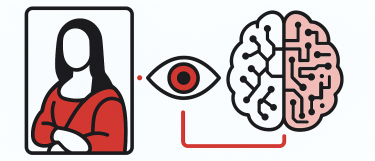
Art Matters
The transdisciplinary Thematic Research Network ‘Art Matters’ explores aesthetic phenomena situated within the complex interplay between humans and machines. Its objective is to advance a deeper understanding and critical examination of the intricate processes underlying artistic production and perception in the age of Artificial Intelligence.
The Thematic Research Network ‘Art Matters’ unites critical reflection, technological innovation, and artistic practice, bringing the diverse epistemic perspectives of the humanities and natural sciences into constructive resonance. Through workshops and interactive exchange formats at Heidelberg University, the network fosters cross-disciplinary tandem projects that stimulate collaborative inquiry. Central to these endeavours is a shared interest in art as a lens through which the operative principles of artificial intelligence, human perception and cognition can be comparatively illuminated, and as a creative practice capable of generating novel impulses and methodologies for scientific research.
Among the questions addressed by the Thematic Research Network ‘Art Matters’ are the following:
- Under which conditions can artifacts produced by AI systems be regarded as works of art?
- Does the emergence of AI alter the boundary between the (cognitive) subject and the (objective) environment?
- Is AI capable of comprehending art – both as a producer and as a recipient – or do creative agency and aesthetic experience remain fundamentally anchored in the domain of human life?
We warmly welcome the participation of interested researchers from Heidelberg University and invite their further inquiries! While the network’s initial focus encompasses visual phenomena, other modalities such as sound and music, language and literature, as well as movement and film, are likewise encouraged and will be taken into consideration.
Coordination: Dr. Michael Hoff (IEK) and PD Dr. Johannes Gerwien (IDF)
First members of the TRN „Art Matters“:
Table
Funded as part of the Strategy of Excellence by:

